
Car insurance covers repairs to your car only when the damage comes from a covered event, such as an accident, theft, vandalism, fire, flooding, hail or hitting an animal, and only if your policy includes collision or comprehensive coverage. It does not pay for mechanical breakdowns, normal wear and tear or routine maintenance. If your engine or transmission simply fails on its own, the repair bill is usually yours.
This guide explains exactly which repairs insurance pays for, which coverage applies in each situation, how your deductible changes the math, and what options exist for the repairs insurance will not touch. If you are reviewing your own policy right now, you can also compare car insurance quotes to see what adding collision or comprehensive coverage would cost.
Which repairs does car insurance pay for?
The quickest way to answer the question is to look at what caused the damage. Insurance is built around sudden, accidental events, so the cause matters far more than the part that needs fixing.
| What happened | Usually paid by | Good to know |
|---|---|---|
| You hit another car or an object | Your collision coverage | You pay your deductible first |
| Another driver hit you | Their property damage liability | You can also claim on your own collision coverage |
| Hail, flood, fire or a falling tree | Your comprehensive coverage | Weather damage is a comprehensive claim |
| You hit a deer or another animal | Your comprehensive coverage | Even though it feels like a collision |
| Theft or vandalism | Your comprehensive coverage | File a police report quickly |
| Cracked windshield from a rock | Comprehensive or glass coverage | Some states have no deductible for windshields |
| Pothole damage | Your collision coverage | Treated as a collision with the road |
| Engine or transmission fails on its own | Not covered by car insurance | Paid out of pocket or by a separate plan |
| Worn brakes, tires, oil changes | Not covered by car insurance | Routine maintenance is the owner's cost |
These are general rules. Your exact protection depends on the coverages you chose, your limits and deductibles, and the wording of your policy, so check your declarations page if you are unsure.
The coverages that pay to repair your own car
Most people who ask whether insurance covers repairs are really asking about their own car. Two optional coverages handle that, and together they are what most people mean by "full coverage."
Collision coverage
Collision coverage pays to repair your car after it hits another vehicle or an object, such as a pole, a guardrail, a building or a tree, regardless of who was at fault. According to the Insurance Information Institute, it also covers damage from potholes and rollover accidents. You pay your deductible, and the insurer pays the rest of the covered repair cost up to the car's value.
Comprehensive coverage
Comprehensive coverage pays for damage caused by something other than a collision. The Insurance Information Institute lists theft, vandalism, fire, flood, hail, falling rocks or trees and striking an animal among the events it covers. Cracked or shattered glass usually falls here too, and in some states there is no deductible for windshield repair and replacement.
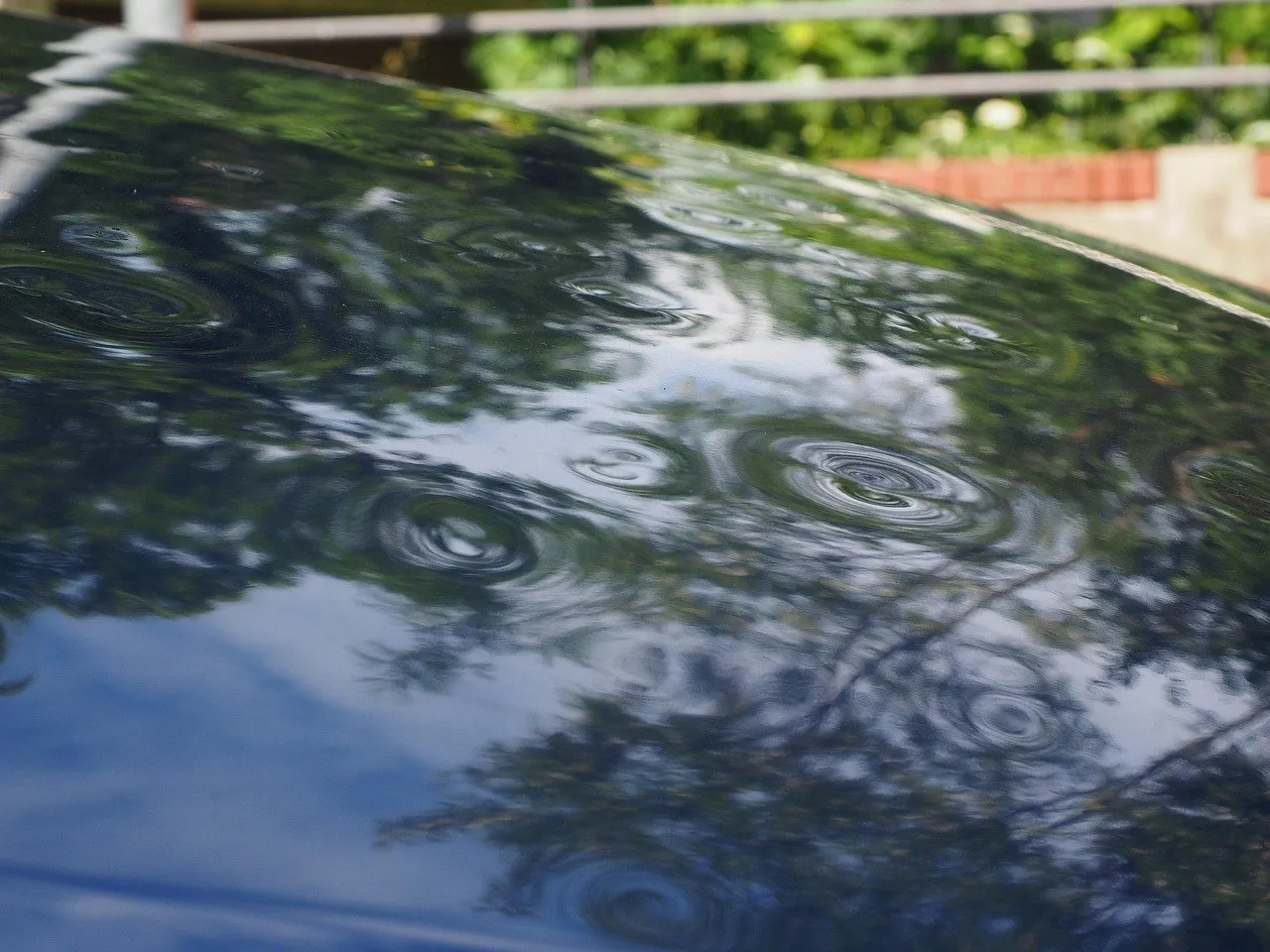
Hail dents like these are a typical comprehensive claim, not a collision claim. Photo: Hans on Pixabay.
Why liability-only insurance won't fix your car
The minimum insurance most states require is liability coverage, and it protects other people, not you. Liability insurance pays for the damage you cause to someone else's car or property, but never for damage to your own vehicle. If you carry only your state's minimum and cause an accident, the repairs to your car come out of your pocket. You can check what your state requires in our guide to car insurance requirements by state.
What car insurance does not cover
Car insurance is designed for sudden, accidental losses. Anything that happens gradually, or because a part simply reached the end of its life, falls outside it.
Mechanical breakdowns
If your transmission slips, your engine overheats because a water pump failed, or your air conditioning compressor quits, a standard auto policy will not pay for the repair. The Insurance Information Institute is explicit that collision coverage will not reimburse you for mechanical failure, and comprehensive coverage does not either, because a breakdown is not theft, weather or an accident. These are often the most expensive repairs a car needs: a transmission repair averages around $3,000, and you can see typical repair costs for other major parts in our interactive guide.
If a breakdown bill is what worries you, a vehicle service contract is built for exactly this gap. You can get a free vehicle service contract quote and compare it with what a major repair would cost.
Wear and tear and routine maintenance
Brake pads, tires, wiper blades, batteries, belts and fluids wear out with normal use, and replacing them is part of owning a car. Insurance treats these as maintenance, not losses. The same goes for oil changes, tune-ups and inspections.
Damage from neglect or existing problems
An insurer can also deny a claim when damage results from neglect, such as an engine destroyed by never changing the oil, or from a problem that existed before the event you are claiming for. Keeping service records protects you if a claim is ever questioned.
When a mechanical problem is caused by an accident
The line between accident damage and a breakdown is not always obvious, and this is where many claim disputes start. The rule of thumb is that insurance looks at the cause, not the part.
If a collision cracks your radiator or damages your transmission, that mechanical damage is part of the accident and is normally covered under collision. The same is true if a flood soaks your engine, which is a comprehensive claim. The reverse is not covered: if a worn tie rod breaks and you hit a guardrail as a result, collision may pay for the crash damage, but the failed tie rod itself is still a maintenance item. When the cause is unclear, insurers often send an adjuster or ask a repair shop to document what failed first.
How your deductible affects a repair claim
Every collision and comprehensive claim starts with your deductible, the amount you pay before insurance pays the rest. If you have a $1,000 collision deductible and the repair costs $1,400, the insurer pays $400. If the repair costs $800, the insurer pays nothing at all.
That makes small claims a judgment call. A claim can affect what you pay for insurance later, depending on your insurer, your state and who was at fault, so for repairs only slightly above your deductible, many drivers decide to pay out of pocket. For large repairs, the decision is easy. If you are choosing a deductible now, weigh the lower premium of a high deductible against whether you could comfortably pay that amount after an accident.
Shopping for a policy that includes collision and comprehensive? You can get car insurance quotes from several companies with one short form.
How to pay for repairs car insurance won't cover
Because insurance stops at mechanical failure and wear, drivers who want help with breakdown repairs usually choose one of three approaches.
Mechanical breakdown insurance
Some auto insurers sell mechanical breakdown insurance (MBI), either as an add-on to a car insurance policy or as a separate policy. It helps pay for repairs when a covered part fails, after a deductible. As Bankrate explains, it does not cover routine maintenance, wear and tear or pre-existing problems, and insurers often set strict age and mileage limits, so it is mainly available for newer cars. Not every insurer offers it.
A vehicle service contract
A vehicle service contract, often called an extended car warranty, is not insurance. It is a contract in which the provider agrees to pay for repairs to the parts the contract lists, subject to its exclusions and deductible. Service contracts are often available for older and higher-mileage cars that no longer qualify for MBI, which is why many buyers consider an extended warranty for a used car. Whether one is a good value depends on your car and budget, which we break down in our guide to whether extended car warranties are worth it.
Your own repair fund
The third option is to pay for repairs yourself from money set aside for the purpose. It costs nothing if your car stays healthy, but it only works if the fund is large enough when a big repair arrives.
| Car insurance (collision and comprehensive) | Mechanical breakdown insurance | Vehicle service contract | |
|---|---|---|---|
| Pays for | Damage from accidents, theft, weather and other covered events | Covered mechanical and electrical failures | Repairs to the parts listed in the contract |
| Is it insurance? | Yes | Yes | No, it's a service contract |
| Typical eligibility | Any insured car | Usually newer, lower-mileage cars | Often older and higher-mileage cars too |
| Maintenance and wear | Not covered | Not covered | Usually not included |
If breakdown repairs are your main worry, you can get a free vehicle service contract quote and compare it with the repair costs for your car before deciding.
How to file a repair claim with your insurer
If your car was damaged in an accident or another covered event, these steps keep the claim moving:
- Make sure everyone is safe and call the police if anyone is hurt or the damage is significant.
- Document the damage with photos of every vehicle and the scene, and exchange insurance information with other drivers.
- Contact your insurer promptly, usually through its app, website or claims phone line.
- Get an estimate. Your insurer may send an adjuster, use photos, or ask you to visit a repair shop.
- Choose your repair shop. In many states you have the right to pick your own shop, even if the insurer recommends one.
- Pay your deductible to the shop when the repair is done, unless the other driver's insurer is paying.
Keep copies of the estimate, the final invoice and all correspondence. If the insurer's estimate seems too low, ask the shop to send a supplement listing the extra work it found.
Choosing coverage that protects your car
If your car is financed or leased, your lender will almost certainly require collision and comprehensive coverage anyway. If you own your car outright, the decision is yours. A useful test is to compare the car's value with what the coverage costs each year: on a newer or valuable car, collision and comprehensive are usually well worth it, while on an older car worth a few thousand dollars, some owners drop them and keep only liability.
Whatever you decide, remember the boundary this whole guide comes back to: insurance pays when something happens to your car, not when something wears out or breaks inside it. Planning for both kinds of cost is what keeps a repair bill from turning into a financial emergency. To see what full coverage would cost for your car, compare car insurance quotes, and if breakdown repairs worry you more, request a vehicle service contract quote.
Frequently asked questions
Does full coverage car insurance cover engine failure?
No, not when the engine fails on its own. Full coverage means collision and comprehensive, which pay for damage from accidents and events like floods or fire. If an accident or flood damages the engine, that damage is normally covered; a breakdown from wear or a failed part is not.
Does car insurance cover repairs if the accident wasn't my fault?
Usually, yes. The at-fault driver's property damage liability should pay for your repairs. You can also claim through your own collision coverage, and your insurer may then recover the cost, including your deductible, from the other driver's insurer. Rules differ in no-fault states and when the other driver is uninsured, so check your state's rules.
Does car insurance cover a blown tire?
A tire that wears out or fails on its own is not covered. If a tire is damaged in a covered event, such as vandalism or a collision, the tire damage may be included in that claim, subject to your deductible.
Does car insurance cover windshield repair?
Windshield damage from a rock, hail or vandalism is usually covered under comprehensive or a separate glass coverage. Some states have no deductible for windshield repair or replacement, so you may pay little or nothing.
Will my insurance rates go up if I file a repair claim?
They may. Whether a claim raises your premium depends on your insurer, your state, the type of claim and who was at fault. At-fault collision claims are more likely to affect rates than claims for weather or a cracked windshield. Ask your insurer before filing a small claim.
This guide gives general information about how auto insurance typically works in the United States. Coverage depends on your policy, your insurer and your state's rules, so check your policy documents or ask your insurer about a specific claim. Cover photo: geraldoswald62 on Pixabay.